Mostrar mensagens com a etiqueta Autores dos EUA. Mostrar todas as mensagens

quarta-feira, abril 16, 2008

Henry Ward Beecher - Pensamento


"It is not what we read, but what we remember that makes us learned. It is not what we intend but what we do that makes us useful. And, it is not a few faint wishes but a lifelong struggle that makes us valiant."


Henry Ward Beecher (Sacerdote, orador e escritor americano, 1813-1887)


sexta-feira, abril 04, 2008

Martin Luther King - I Have a Dream!


I am happy to join with you today in what will go down in history as the greatest demonstration for freedom in the history of our nation.

Five score years ago, a great American, in whose symbolic shadow we stand today, signed the Emancipation Proclamation. This momentous decree came as a great beacon light of hope to millions of Negro slaves who had been seared in the flames of withering injustice. It came as a joyous daybreak to end the long night of their captivity.

But one hundred years later, the Negro still is not free. One hundred years later, the life of the Negro is still sadly crippled by the manacles of segregation and the chains of discrimination. One hundred years later, the Negro lives on a lonely island of poverty in the midst of a vast ocean of material prosperity. One hundred years later, the Negro is still languishing in the corners of American society and finds himself an exile in his own land. So we have come here today to dramatize a shameful condition.

In a sense we have come to our nation's capital to cash a check. When the architects of our republic wrote the magnificent words of the Constitution and the Declaration of Independence, they were signing a promissory note to which every American was to fall heir. This note was a promise that all men, yes, black men as well as white men, would be guaranteed the unalienable rights of life, liberty, and the pursuit of happiness.

It is obvious today that America has defaulted on this promissory note insofar as her citizens of color are concerned. Instead of honoring this sacred obligation, America has given the Negro people a bad check, a check which has come back marked "insufficient funds." But we refuse to believe that the bank of justice is bankrupt. We refuse to believe that there are insufficient funds in the great vaults of opportunity of this nation. So we have come to cash this check — a check that will give us upon demand the riches of freedom and the security of justice. We have also come to this hallowed spot to remind America of the fierce urgency of now. This is no time to engage in the luxury of cooling off or to take the tranquilizing drug of gradualism. Now is the time to make real the promises of democracy. Now is the time to rise from the dark and desolate valley of segregation to the sunlit path of racial justice. Now is the time to lift our nation from the quick sands of racial injustice to the solid rock of brotherhood. Now is the time to make justice a reality for all of God's children.

It would be fatal for the nation to overlook the urgency of the moment. This sweltering summer of the Negro's legitimate discontent will not pass until there is an invigorating autumn of freedom and equality. Nineteen sixty-three is not an end, but a beginning. Those who hope that the Negro needed to blow off steam and will now be content will have a rude awakening if the nation returns to business as usual. There will be neither rest nor tranquility in America until the Negro is granted his citizenship rights. The whirlwinds of revolt will continue to shake the foundations of our nation until the bright day of justice emerges.

But there is something that I must say to my people who stand on the warm threshold which leads into the palace of justice. In the process of gaining our rightful place we must not be guilty of wrongful deeds. Let us not seek to satisfy our thirst for freedom by drinking from the cup of bitterness and hatred.

We must forever conduct our struggle on the high plane of dignity and discipline. We must not allow our creative protest to degenerate into physical violence. Again and again we must rise to the majestic heights of meeting physical force with soul force. The marvelous new militancy which has engulfed the Negro community must not lead us to a distrust of all white people, for many of our white brothers, as evidenced by their presence here today, have come to realize that their destiny is tied up with our destiny. They have come to realize that their freedom is inextricably bound to our freedom. We cannot walk alone.

As we walk, we must make the pledge that we shall always march ahead. We cannot turn back. There are those who are asking the devotees of civil rights, "When will you be satisfied?" We can never be satisfied as long as the Negro is the victim of the unspeakable horrors of police brutality. We can never be satisfied, as long as our bodies, heavy with the fatigue of travel, cannot gain lodging in the motels of the highways and the hotels of the cities. We cannot be satisfied as long as the Negro's basic mobility is from a smaller ghetto to a larger one. We can never be satisfied as long as our children are stripped of their selfhood and robbed of their dignity by signs stating "For Whites Only". We cannot be satisfied as long as a Negro in Mississippi cannot vote and a Negro in New York believes he has nothing for which to vote. No, no, we are not satisfied, and we will not be satisfied until justice rolls down like waters and righteousness like a mighty stream.

I am not unmindful that some of you have come here out of great trials and tribulations. Some of you have come fresh from narrow jail cells. Some of you have come from areas where your quest for freedom left you battered by the storms of persecution and staggered by the winds of police brutality. You have been the veterans of creative suffering. Continue to work with the faith that unearned suffering is redemptive.

Go back to Mississippi, go back to Alabama, go back to South Carolina, go back to Georgia, go back to Louisiana, go back to the slums and ghettos of our northern cities, knowing that somehow this situation can and will be changed. Let us not wallow in the valley of despair.

I say to you today, my friends, so even though we face the difficulties of today and tomorrow, I still have a dream. It is a dream deeply rooted in the American dream.

I have a dream that one day this nation will rise up and live out the true meaning of its creed: "We hold these truths to be self-evident: that all men are created equal."

I have a dream that one day on the red hills of Georgia the sons of former slaves and the sons of former slave owners will be able to sit down together at the table of brotherhood.

I have a dream that one day even the state of Mississippi, a state sweltering with the heat of injustice, sweltering with the heat of oppression, will be transformed into an oasis of freedom and justice.

I have a dream that my four little children will one day live in a nation where they will not be judged by the color of their skin but by the content of their character.

I have a dream today.

I have a dream that one day, down in Alabama, with its vicious racists, with its governor having his lips dripping with the words of interposition and nullification; one day right there in Alabama, little black boys and black girls will be able to join hands with little white boys and white girls as sisters and brothers.

I have a dream today.

I have a dream that one day every valley shall be exalted, every hill and mountain shall be made low, the rough places will be made plain, and the crooked places will be made straight, and the glory of the Lord shall be revealed, and all flesh shall see it together.

This is our hope. This is the faith that I go back to the South with. With this faith we will be able to hew out of the mountain of despair a stone of hope. With this faith we will be able to transform the jangling discords of our nation into a beautiful symphony of brotherhood. With this faith we will be able to work together, to pray together, to struggle together, to go to jail together, to stand up for freedom together, knowing that we will be free one day.

This will be the day when all of God's children will be able to sing with a new meaning, "My country, 'tis of thee, sweet land of liberty, of thee I sing. Land where my fathers died, land of the pilgrim's pride, from every mountainside, let freedom ring."

And if America is to be a great nation this must become true. So let freedom ring from the prodigious hilltops of New Hampshire. Let freedom ring from the mighty mountains of New York. Let freedom ring from the heightening Alleghenies of Pennsylvania!

Let freedom ring from the snowcapped Rockies of Colorado!

Let freedom ring from the curvaceous slopes of California!

But not only that; let freedom ring from Stone Mountain of Georgia!

Let freedom ring from Lookout Mountain of Tennessee!

Let freedom ring from every hill and molehill of Mississippi. From every mountainside, let freedom ring.

And when this happens, when we allow freedom to ring, when we let it ring from every village and every hamlet, from every state and every city, we will be able to speed up that day when all of God's children, black men and white men, Jews and Gentiles, Protestants and Catholics, will be able to join hands and sing in the words of the old Negro spiritual, "Free at last! free at last! thank God Almighty, we are free at last!"


Dr. Martin Luther King, Jr. (Pastor e activista político; Prémio Nobel da Paz em 1964, 1929-1968)

domingo, agosto 26, 2007

Sara Teansdale - Peace


Foto: Barbara Cole


Peace flows into me
As the tide to the pool by the shore;
It is mine forevermore,
It will not ebb like the sea.

I am the pool of blue
That worships the vivid sky;
My hopes were heaven-high,
They are all fulfilled in you.

I am the pool of gold
When sunset burns and dies --
You are my deepening skies;
Give me your stars to hold.


Sara Teasdale (Poetisa Norte-Americana, 1884-1933)

Biografia de Sara Teasdale

Edgar Allan Poe - Annabel Lee


Foi há muitos e muitos anos já,
Num reino de ao pé do mar.
Como sabeis todos, vivia lá
Aquela que eu soube amar;
E vivia sem outro pensamento
Que amar-me e eu a adorar.

Eu era criança e ela era criança,
Neste reino ao pé do mar;
Mas o nosso amor era mais que amor -
O meu e o dela a amar;
Um amor que os anjos do céu vieram
a ambos nós invejar.

E foi esta a razão por que, há muitos anos,
Neste reino ao pé do mar,
Um vento saiu duma nuvem, gelando
A linda que eu soube amar;
E o seu parente fidalgo veio
De longe a me a tirar,
Para a fechar num sepulcro
Neste reino ao pé do mar.

E os anjos, menos felizes no céu,
Ainda a nos invejar...
Sim, foi essa a razão (como sabem todos,
Neste reino ao pé do mar)
Que o vento saiu da nuvem de noite
Gelando e matando a que eu soube amar.

Mas o nosso amor era mais que o amor
De muitos mais velhos a amar,
De muitos de mais meditar,
E nem os anjos do céu lá em cima,
Nem demônios debaixo do mar
Poderão separar a minha alma da alma
Da linda que eu soube amar.

Porque os luares tristonhos só me trazem sonhos
Da linda que eu soube amar;
E as estrelas nos ares só me lembram olhares
Da linda que eu soube amar;
E assim 'stou deitado toda a noite ao lado
Do meu anjo, meu anjo, meu sonho e meu fado,
No sepulcro ao pé do mar,
Ao pé do murmúrio do mar.


Edgar Allan Poe (Poeta Norte-Americano, 1809-1849)


Annabel Lee


It was many and many a year ago,
In a kingdom by the sea,
That a maiden there lived whom you may know
By the name of Annabel Lee;
And this maiden she lived with no other thought
Than to love and be loved by me.

I was a child and she was a child,
In this kingdom by the sea:
But we loved with a love that was more than love--
I and my Annabel Lee;
With a love that the winged seraphs of heaven
Coveted her and me.

And this was the reason that, long ago,
In this kingdom by the sea,
A wind blew out of a cloud, chilling
My beautiful Annabel Lee;
So that her highborn kinsman came
And bore her away from me,
To shut her up in a sepulchre
In this kingdom by the sea.

The angels, not half so happy in heaven,
Went envying her and me--
Yes!--that was the reason (as all men know,
In this kingdom by the sea)
That the wind came out of the cloud by night,
Chilling and killing my Annabel Lee.

But our love it was stronger by far than the love
Of those who were older than we--
Of many far wiser than we--
And neither the angels in heaven above,
Nor the demons down under the sea,
Can ever dissever my soul from the soul
Of the beautiful Annabel Lee:

For the moon never beams, without bringing me dreams
Of the beautiful Annabel Lee;
And the stars never rise, but I feel the bright eyes
Of the beautiful Annabel Lee;
And so, all the night-tide, I lie down by the side
Of my darling--my darling--my life and my bride,
In her sepulchre there by the sea,
In her tomb by the sounding sea.


Biografia de Edgar Allan Poe

Sara Teasdale - I Am Not Yours


Foto: Barbara Cole


I am not yours, not lost in you,
Not lost, although I long to be
Lost as a candle lit at noon,
Lost as a snowflake in the sea.

You love me, and I find you still
A spirit beautiful and bright,
Yet I am I, who long to be
Lost as a light is lost in light.

Oh plunge me deep in love -- put out
My senses, leave me deaf and blind,
Swept by the tempest of your love,
A taper in a rushing wind.


Sara Teasdale (Poetisa Norte-Americana, 1884-1933)

Biografia de Sara Teasdale

Sylvia Plath - Palavras


Golpes,
De machado na madeira,
E os ecos!
Ecos que partem
A galope.
A seiva
Jorra como pranto, como
Água lutando
Para repor seu espelho
sobre a rocha
Que cai e rola,
Crânio branco
Comido pelas ervas.
Anos depois, na estrada,
Encontro
Essas palavras secas e sem rédeas,
Bater de cascos incansável.
Enquanto
Do fundo do poço, estrelas fixas
Decidem uma vida.


Sylvia Plath (Poetisa Norte-Americana, 1932-1963)

traduzido por Ana Cristina Cesar
(in Escritos da Inglaterra, Ed. Brasiliense, Brasil, 1988, p. 173)


Words


Axes
After whose stroke the wood rings,
And the echoes!
Echoes travelling
Off from the center like horses.
The sap
Wells like tears, like the
Water striving
To re-estabilish its mirror
Over the rock
That drops and turns,
A white skull,
Eaten by weedy greens
Years later I
Encounter them on the road —
Words dry and riderless,
The indefatigable hoof-taps.
While
From the bottom of the pool, fixed stars
Govern a life.


Biografia de Sylvia Plath

Denise Duhamel - Buying Stock


Foto: Fisserman


"...The use of condoms offers substantial protection, but does not
guarantee total protection and that while there is no evidence that deep kissing has resulted in transfer of the virus, no one can say that such transmission would be absolutely impossible."

--The Surgeon General, 1987


I know you won't mind if I ask you to put this on.
It's for your protection as well as mine--Wait.
Wait. Here, before we rush into anything
I've bought a condom for each one of your fingers. And here--
just a minute--Open up.
I'll help you put this one on, over your tongue.
I was thinking:
If we leave these two rolled, you can wear them
as patches over your eyes. Partners have been known to cry,
shed tears, bodily fluids, at all this trust, at even the thought
of this closeness.


Denise Duhamel (Poetisa Norte-Americana, 1961- )


Biografia de Denise Duhamel

Edwin Arlington Robinson - Richard Cory


Sempre que Richard Cory ia até a cidade cada mês,
Que o povo, na calçada, o olhasse era fatal:
Era um cavalheiro da cabeça aos pés,
De feições perfeitas, esbelto, imperial.

E sempre elegantemente bem vestido
E sempre muito humano quando falava;
Mas só em falar as pulsações haviam crescido,
"Bom dia", e até no andar ele brilhava.

E era rico-sim, mais rico do que um soberano
E admirável e educado em cada assunto singular:
Em suma, devia ter tudo possível a um ser humano.
O que nos fazia desejar estar no seu lugar

Assim nós vivemos esperando luz para a alma
E fomos sem a carne, e o pão a maldizer tão tolos ;
E Richard Cory, num verão, na noite calma,
Em casa estourou, com uma bala, os miolos.


Tradução: Silvio Persivo


Edwin Arlington Robinson (Poeta Norte-Americano, 1869-1935)


Whenever Richard Cory went down town,
We people on the pavement looked at him:
He was a gentleman from sole to crown,
Clean favored, and imperially slim.

And he always quietly arrayed,
And he was always human when he talked;
But still he fluttered pulses when he said,
“Good morning”, and he glittered he walked,

And he was rich-yes, richer than a king
And admirably schooled in every grace:
In fine, we thought that he was everything
To make us wish that we were in his place

So on we worked, and waited for the light,
And went without the meat, and cursed the bread;
And Richard Cory, one calm summer night,
Went home and put a bullet through his head.


Biografia de Edwin Arlington Robinson

Elizabeth Bishop - Pink Dog


Foto: Kris Kros


[Rio de Janeiro]

The sun is blazing and the sky is blue.
Umbrellas clothe the beach in every hue.
Naked, you trot across the avenue.

Oh, never have I seen a dog so bare!
Naked and pink, without a single hair...
Startled, the passersby draw back and stare.

Of course they're mortally afraid of rabies.
You are not mad; you have a case of scabies
but look intelligent. Where are your babies?

(A nursing mother, by those hanging teats.)
In what slum have you hidden them, poor bitch,
while you go begging, living by your wits?

Didn't you know? It's been in all the papers,
to solve this problem, how they deal with beggars?
They take and throw them in the tidal rivers.

Yes, idiots, paralytics, parasites
go bobbing int the ebbing sewage, nights
out in the suburbs, where there are no lights.

If they do this to anyone who begs,
drugged, drunk, or sober, with or without legs,
what would they do to sick, four-legged dogs?

In the cafés and on the sidewalk corners
the joke is going round that all the beggars
who can afford them now wear life preservers.

In your condition you would not be able
even to float, much less to dog-paddle.
Now look, the practical, the sensible

solution is to wear a fantasía.
Tonight you simply can't afford to be a-
n eyesore... But no one will ever see a

dog in máscara this time of year.
Ash Wednesday'll come but Carnival is here.
What sambas can you dance? What will you wear?

They say that Carnival's degenerating
— radios, Americans, or something,
have ruined it completely. They're just talking.

Carnival is always wonderful!
A depilated dog would not look well.
Dress up! Dress up and dance at Carnival!


1979

Elizabeth Bishop (Poetisa Norte-Americana, 1911-1979)


«"Cadela Rosada" (Pink Dog) é um dos últimos poemas de Elizabeth Bishop, uma americana com fortes ligações com o Brasil. Viveu no Rio de Janeiro e em Ouro Preto, e traduziu para o inglês poemas de Carlos Drummond, João Cabral e Vinícius de Moraes. Bishop é, também, um dos nomes mais importantes da moderna poesia americana.

Embora concluído em 1979, "Cadela Rosada" começou a ser escrito muitos anos antes. Refere-se a um episódio famoso, de 1962, quando se denunciou que mendigos cariocas estavam a ser assassinados pelo Esquadrão da Morte, que lançava os cadáveres no rio da Guarda.

Elizabeth Bishop identifica a cadela rosada com um mendigo. E pergunta: se estão fazendo isso com seres humanos, o que não farão com uma pobre cadela sarnenta? Mas é interessante também fazer outra leitura: em inglês, bitch (cadela) é, também, prostituta. Então, muitos analistas vêem nesse animal uma metáfora da condição feminina.

Para esses analistas, é a mulher pobre, sozinha, com filhos, sem um lar constituído. Portanto, um ser fora dos padrões, acometido de sarna moral, aos olhos da distinta sociedade. (...)»


Texto de Carlos Machado

Biografia de Elizabeth Bishop


Shel Silverstein - The Little Boy and the Old Man


Said the little boy, "Sometimes I drop my spoon."
Said the old man, "I do that too."
The little boy whispered, "I wet my pants."
"I do that too," laughed the little old man.
Said the little boy, "I often cry."
The old man nodded, "So do I."
"But worst of all," said the boy, "it seems
Grown-ups don't pay attention to me."
And he felt the warmth of a wrinkled old hand.
"I know what you mean," said the little old man.


Shel Silverstein (Poeta Norte-Americano, 1930-1999)

Biografia de Shel Silverstein

domingo, agosto 19, 2007

Paul Laurence Dunbar - Sympathy


Foto: Human Birdcage, by Kako93


I know what the caged bird feels, alas!
When the sun is bright on the upland slopes;
When the wind stirs soft through the springing grass,
And the river flows like a stream of glass;
When the first bird sings and the first bud opes,
And the faint perfume from its chalice steals--
I know what the caged bird feels!


I know why the caged bird beats its wing
Till its blood is red on the cruel bars;
For he must fly back to his perch and cling
When he fain would be on the bough a-swing;
And a pain still throbs in the old, old scars
And they pulse again with a keener sting--
I know why he beats his wing!

I know why the caged bird sings, ah me,
When his wing is bruised and his bosom sore,--
When he beats his bars and he would be free;
It is not a carol of joy or glee,
But a prayer that he sends from his heart's deep core,
But a plea, that upward to Heaven he flings--
I know why the caged bird sings!


Paul Laurence Dunbar (Poeta Norte-Americano, 1872-1906)

Biografia de Paul Laurence Dunbar

Etheridge Knight - A poem to myself (or Blues for a Mississippi Black Boy)


Foto: Ol' Man River, de JucaFii


I was born in Mississippi;
I walked barefooted thru the mud.
Born black in Mississippi,
Walked barefooted thru the mud.
But, when I reached the age of twelve
I left that place for good.
My daddy chopped cotton
And he drank his liquor straight.
Said my daddy chopped cotton
And he drank his liquor straight.
When I left that Sunday morning
He was leaning on the barnyard gate.
Left my mama standing
With the sun shining in her eyes.
Left her standing in the yard
With the sun shining in her eyes.
And I headed North
As straight as the Wild Goose Flies,
I been to Detroit & Chicago
Been to New York city too.
I been to Detroit & Chicago
Been to New York city too.
Said I done strolled all those funky avenues
I'm still the same old black boy with the same old blues.
Going back to Mississippi
This time to stay for good
Going back to Mississippi
This time to stay for good-
Gonna be free in Mississippi
Or dead in the Mississippi mud.


Etheridge Knight (Poeta Norte-Americano, 1931-1991)

Biografia de Etheridge Knight

Lucille Clifton - Homage to My Hips


Foto: Bruno Bisang


these hips are big hips.
they need space to
move around in.
they don't fit into little
petty places. these hips
are free hips.
they don't like to be held back.
these hips have never been enslaved,
they go where they want to go
they do what they want to do.
these hips are mighty hips.
these hips are magic hips.
i have known them
to put a spell on a man and
spin him like a top


Lucille Clifton (Poeta Norte-Americana, 1936- )

Biografia de Lucille Clifton

Maya Angelou - Still I Rise


You may write me down in history
With your bitter, twisted lies,
You may trod me in the very dirt
But still, like dust, I'll rise.

Does my sassiness upset you?
Why are you beset with gloom?
'Cause I walk like I've got oil wells
Pumping in my living room.

Just like moons and like suns,
With the certainty of tides,
Just like hopes springing high,
Still I'll rise.

Did you want to see me broken?
Bowed head and lowered eyes?
Shoulders falling down like teardrops,
Weakened by my soulful cries?

Does my haughtiness offend you?
Don't you take it awful hard
'Cause I laugh like I've got gold mines
Diggin' in my own backyard.

You may shoot me with your words,
You may cut me with your eyes,
You may kill me with your hatefulness,
But still, like air, I'll rise.

Does my sexiness upset you?
Does it come as a surprise
That I dance like I've got diamonds
At the meeting of my thighs?

Out of the huts of history's shame
I rise
Up from a past that's rooted in pain
I rise
I'm a black ocean, leaping and wide,
Welling and swelling I bear in the tide.

Leaving behind nights of terror and fear
I rise
Into a daybreak that's wondrously clear
I rise
Bringing the gifts that my ancestors gave,
I am the dream and the hope of the slave.
I rise
I rise
I rise.


Maya Angelou (Poeta Norte-Americana, 1928- )

Biografia de Maya Angelou

Etheridge Knight - As you leave me


Foto: Seoul extasy, de Stefan Gesell


Shiny record albums scattered over
the living room floor, reflecting light
from the lamp, sharp reflections that hurt
my eyes as I watch you, squatting among the platters,
the beer foam making mustaches on your lips.

And, too,
the shadows on your cheeks from your long lashes
fascinate me--almost as much as the dimples
in your cheeks, your arms and your legs.

You
hum along with Mathis--how you love Mathis!
with his burnished hair and quicksilver voice that dances
among the stars and whirls through canyons
like windblown snow, sometimes I think that Mathis
could take you from me if you could be complete
without me. I glance at my watch. It is now time.

You rise,
silently, and to the bedroom and the paint;
on the lips red, on the eyes black,
and I lean in the doorway and smoke, and see you
grow old before my eyes, and smoke, why do you
chatter while you dress? and smile when you grab
your large leather purse? don't you know that when you leave me
I walk to the window and watch you? and light
a reefer as I watch you? and I die as I watch you
disappear in the dark streets
to whistle and smile at the johns


Etheridge Knight(Poeta Norte-Americano, 1931-1991)

Biografia de Etheridge Knight

Maya Angelou - Alone


Lying, thinking
Last night
How to find my soul a home
Where water is not thirsty
And bread loaf is not stone
I came up with one thing
And I don't believe I'm wrong
That nobody,
But nobody
Can make it out here alone.

Alone, all alone
Nobody, but nobody
Can make it out here alone.

There are some millionaires
With money they can't use
Their wives run round like banshees
Their children sing the blues
They've got expensive doctors
To cure their hearts of stone.
But nobody
No, nobody
Can make it out here alone.

Alone, all alone
Nobody, but nobody

Can make it out here alone.

Now if you listen closely
I'll tell you what I know
Storm clouds are gathering
The wind is gonna blow
The race of man is suffering
And I can hear the moan,
'Cause nobody,
But nobody
Can make it out here alone.

Alone, all alone
Nobody, but nobody
Can make it out here alone.


Maya Angelou (Poeta Norte-Americana, 1928- )

Biografia de Maya Angelou

Langston Hughes - Will V-Day Be Me-Day Too?

Pintura: Liberty, by Duplo86


Over There,

World War II.


Dear Fellow Americans,
I write this letter
Hoping times will be better
When this war
Is through.
I'm a Tan-skinned Yank
Driving a tank.
I ask, WILL V-DAY
BE ME-DAY, TOO?

I wear a U. S. uniform.
I've done the enemy much harm,
I've driven back
The Germans and the Japs,
From Burma to the Rhine.
On every battle line,
I've dropped defeat
Into the Fascists' laps.

I am a Negro American
Out to defend my land
Army, Navy, Air Corps--
I am there.
I take munitions through,
I fight--or stevedore, too.
I face death the same as you do
Everywhere.

I've seen my buddy lying
Where he fell.
I've watched him dying
I promised him that I would try
To make our land a land
Where his son could be a man--
And there'd be no Jim Crow birds
Left in our sky.

So this is what I want to know:
When we see Victory's glow,
Will you still let old Jim Crow
Hold me back?
When all those foreign folks who've waited--
Italians, Chinese, Danes--are liberated.
Will I still be ill-fated
Because I'm black?

Here in my own, my native land,
Will the Jim Crow laws still stand?
Will Dixie lynch me still
When I return?
Or will you comrades in arms
From the factories and the farms,
Have learned what this war
Was fought for us to learn?

When I take off my uniform,
Will I be safe from harm--
Or will you do me
As the Germans did the Jews?
When I've helped this world to save,
Shall I still be color's slave?
Or will Victory change
Your antiquated views?

You can't say I didn't fight
To smash the Fascists' might.
You can't say I wasn't with you
in each battle.
As a soldier, and a friend.
When this war comes to an end,
Will you herd me in a Jim Crow car
Like cattle?

Or will you stand up like a man
At home and take your stand
For Democracy?
That's all I ask of you.
When we lay the guns away
To celebrate
Our Victory Day
WILL V-DAY BE ME-DAY, TOO?
That's what I want to know.

Sincerely,

GI Joe.


Langston Hughes (Poeta Norte-Americano, 1902-1967)

Biografia de Langston Hughes

domingo, junho 25, 2006

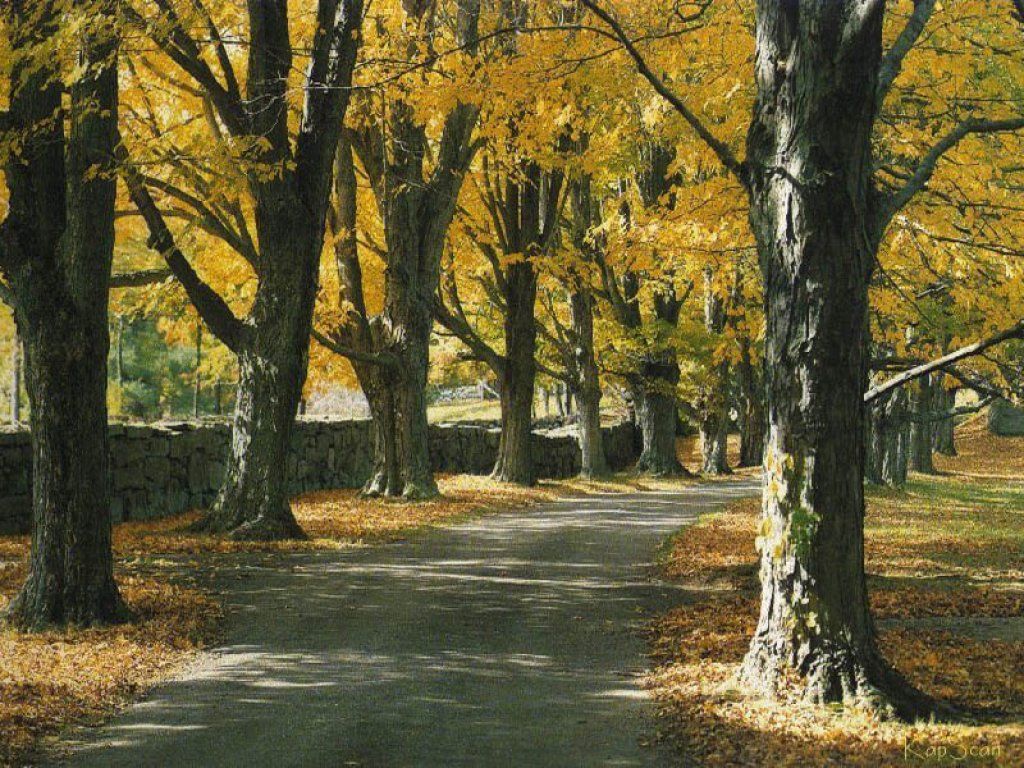
R. Frost - The Road Not Taken


Two roads diverged in a yellow wood,
And sorry I could not travel both
And be one traveler, long I stood
And looked down one as far as I could
To where it bent in the undergrowth;
Then took the other, as just as fair,
And having perhaps the better claim,
Because it was grassy and wanted wear;
Though as for that the passing there
Had worn them really about the same,
And both that morning equally lay
In leaves no step had trodden black.
Oh, I kept the first for another day!
Yet knowing how way leads on to way,
I doubted if I should ever come back.
I shall be telling this with a sigh
Somewhere ages and ages hence:
Two roads diverged in a wood, and I-
I took the one less traveled by,
And that has made all the difference.


Robert Frost (1920)

Foto: Autor desconhecido (in www.wallpaperbase.com)